LED TECHNOLOGY BASICS
LED TECHNOLOGY
LED (light-emitting diode) is a semiconductor light source that converts electrical energy into light without a conventional filament. In practice, the quality of an LED system depends not only on the LED chip but on the complete assembly: optics, driver, thermal management, enclosure, surge protection and installation conditions.
When comparing products, it is more important to consider luminous flux in lumens (lm), efficacy in lm/W, color temperature (K), color rendering index (CRI), beam angle and declared service life than nominal wattage alone. Two LED luminaires with the same power can produce very different amounts and qualities of light.
LED technology enables instant switching, dimming with compatible products, dynamic RGB/RGBW control and more precise light distribution. This creates savings not only through lower installed power but also through better control of operating time and light output.
Energy efficiency
Long service life
Warm, neutral and cool white
RGB and dynamic effects
Different levels of IP protection
Intensity and scene control
Note: technical characteristics, power and protection rating should always be selected according to actual installation conditions and the specifications of the specific product.
CURRENT REFERENCE ELECTRICITY PRICE IN CROATIA
For the indicative calculations on this page, an approximate variable price of 0.17728 EUR/kWh incl. VAT is used for a household on the Plavi tariff model. It is calculated from the energy price of 0.091324 EUR/kWh, network charge of 0.052324 EUR/kWh and renewable-energy charge of 0.013239 EUR/kWh, plus 13% VAT. Fixed monthly charges are not included because they do not change when switching from one light source to another.
For households that exceed 3,000 kWh over six months, a 35% higher energy tariff applies to consumption above that threshold; therefore, the price of each additional kWh above the threshold is approximately 0.21340 EUR/kWh. Business users should enter the actual effective price from their own bill or contract into the calculator.
Tariff status: September 2026; the regulation for 1 Oct 2026–31 Mar 2027 keeps the same energy price. Sources:
HEP Elektra,
HEP ODS and
NN 101/2026.
FLEXIBLE LINEAR PRODUCT
LED STRIPS
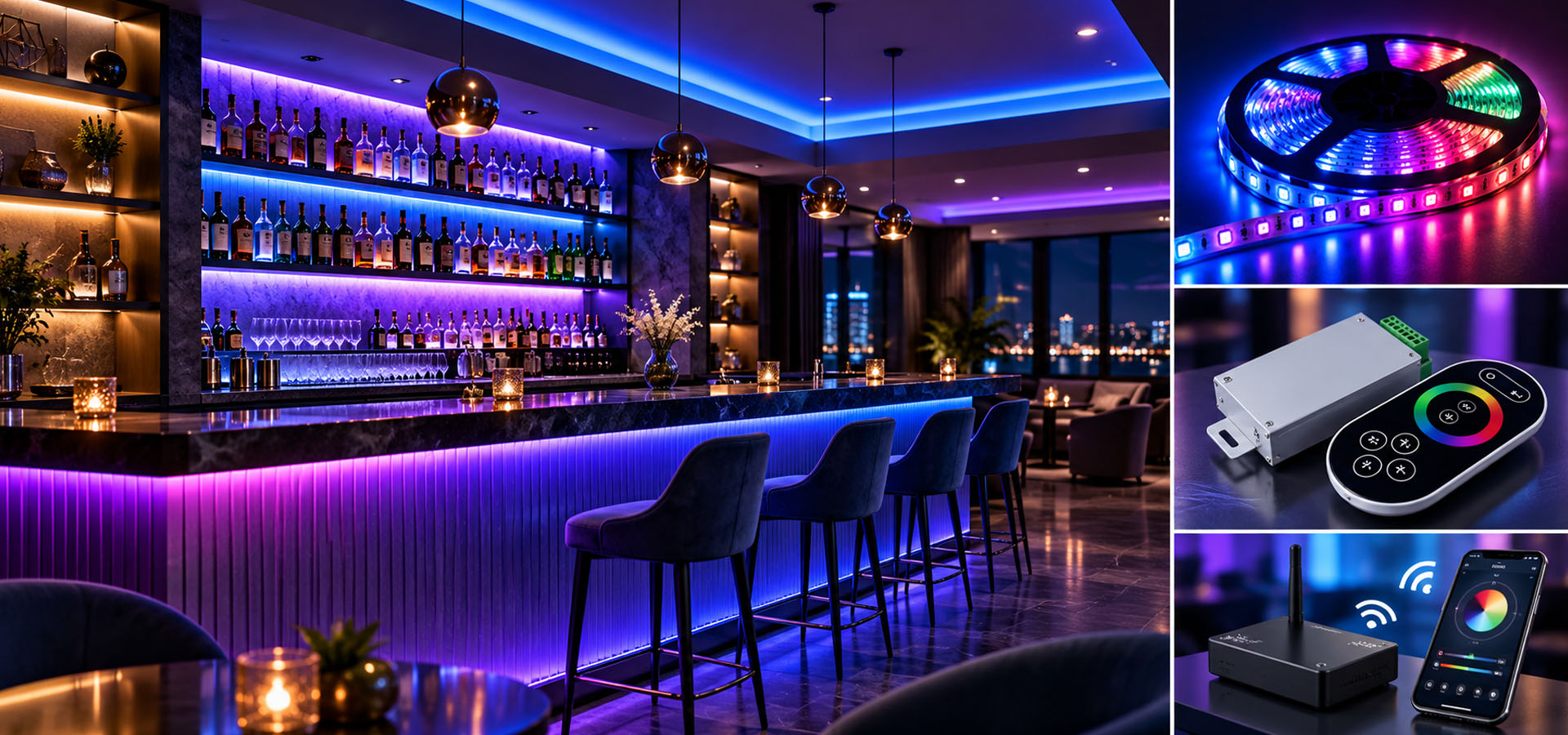
LED strips are flexible linear light sources for indirect, decorative and functional lighting. They are used in niches, suspended ceilings, shelves, furniture, bars, stairs, display cases and architectural details. Depending on the version, they can provide single-color white light, tunable white or RGB/RGBW colors.
When selecting a strip, check power per meter, luminous flux per meter, LED spacing, operating voltage, maximum feed length from one point and protection rating. With higher-power strips, an aluminum profile is not only an aesthetic addition but also serves for heat dissipation.
For longer installations, conductor cross-section and multiple power-feed points should be planned to reduce voltage drop. The driver should have sufficient power reserve and, for dimming or color changing, must be compatible with the selected controller.
INSTALLATION IN FLOORS, WALLS & CEILINGS
RECESSED LED LIGHTING
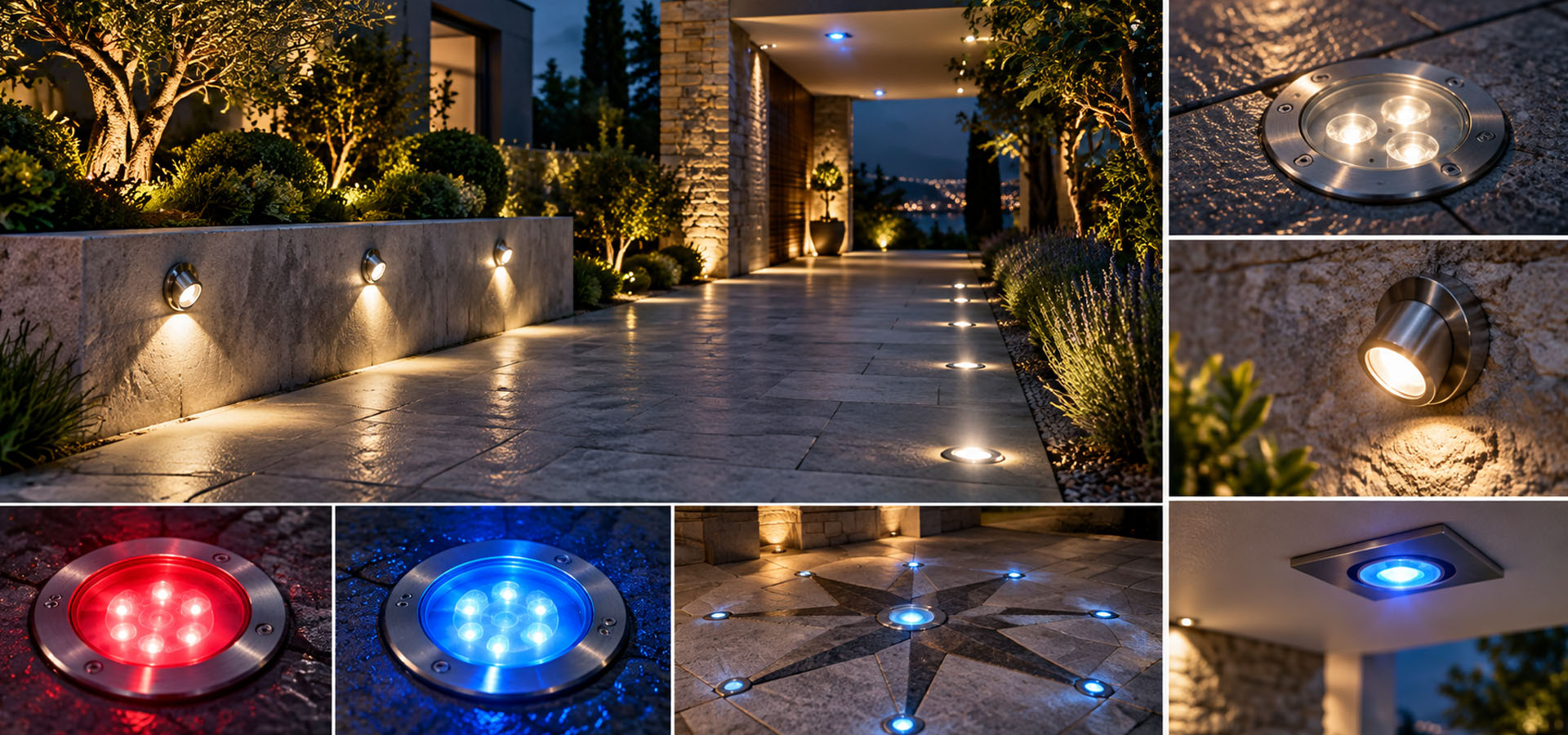
Recessed LED lighting is installed in ceilings, walls or floors so that most of the housing remains concealed. It can serve as general lighting, orientation light or accent lighting for walls, stairs, access areas and outdoor surfaces.
For installation in floors and outdoor surfaces, mechanical load capacity, drainage, connection protection and an enclosure designed for that installation method are especially important. For wall and ceiling versions, installation depth, ventilation, beam angle and driver replaceability are important.
For products used in wet, outdoor and floor zones, technical characteristics should always be verified against the specification of the specific model. Special attention should be paid to operating voltage, permitted installation conditions, IP protection, enclosure type and thermal management.
FLEXIBLE CONTOUR LIGHTING
LED NEON FLEX
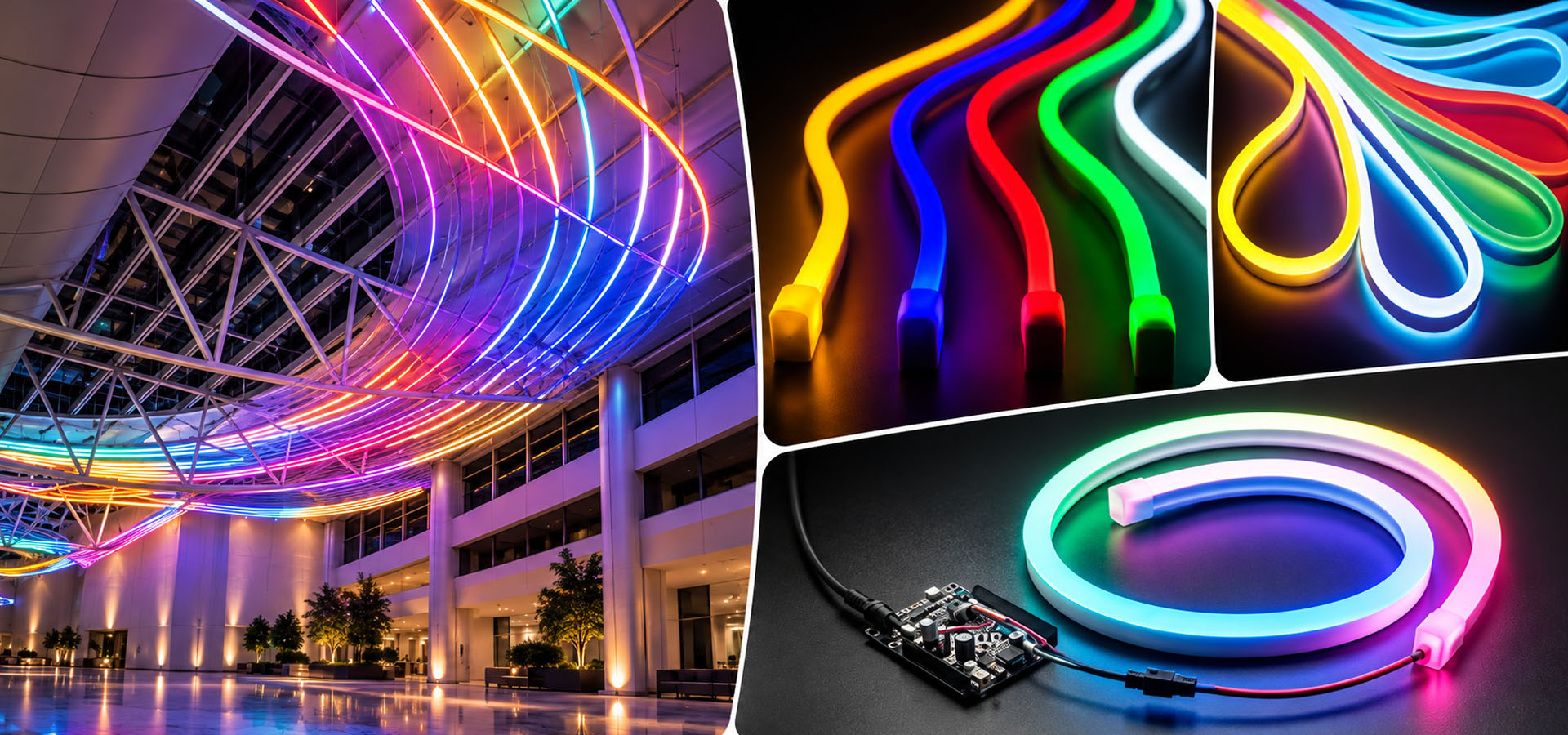
LED Neon Flex provides a continuous line of light without visible individual LED points. It is used for building contours, bridges, interiors, bars, suspended ceilings, signs and advertising, as well as decorative outlining of vessels and other curved surfaces.
Modern Neon Flex products differ by bending direction, cross-section, operating voltage, power per meter, light color and protection rating. For this reason, there is no single universal consumption figure or bending angle; each model should be checked against its technical data sheet.
For outdoor and marine use, versions designed for those conditions should be used, with properly sealed ends and connections. Long runs require power from multiple points to maintain uniform brightness.
REPLACEMENT LIGHT SOURCES
LED BULBS
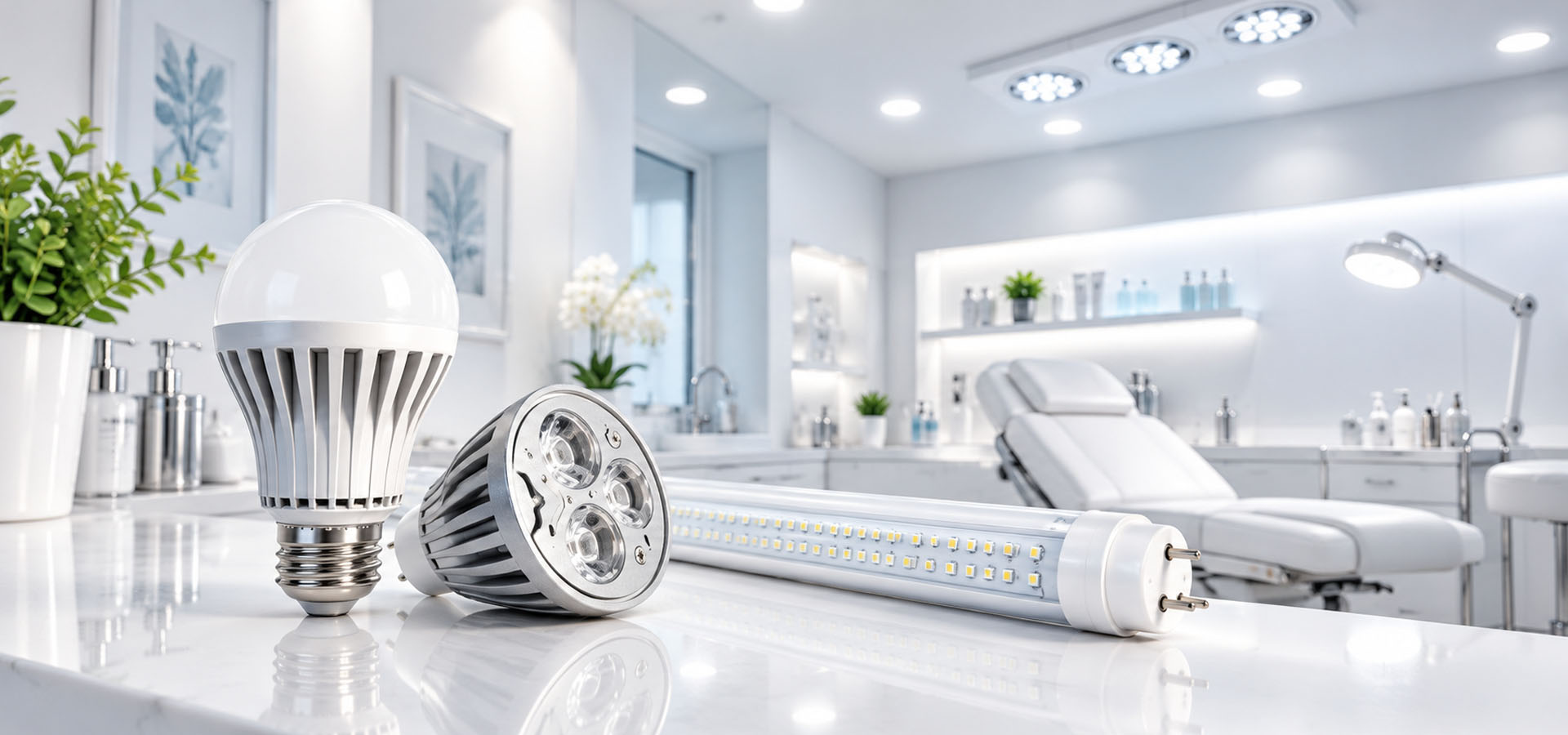
LED bulbs are used to replace conventional and halogen sources in existing sockets. When replacing a source, comparing watts is not enough: luminous flux in lumens, bulb dimensions, shape, beam angle, color temperature, CRI and dimming capability should be compared.
Electricity savings are calculated from the difference between the actual power of the replacement source and the old source, multiplied by the number of units and operating time. With many lamps or long daily operating hours, the consumption difference can be substantial, but return on investment also depends on purchase price, installation and actual product life.
Example using the default settings: 100 halogen bulbs rated at 30 W and operating 16 hours per day consume 17,520 kWh per year. A 3 W LED version consumes 1,752 kWh, a difference of 15,768 kWh. At the basic reference variable price of 0.17728 EUR/kWh, this is approximately EUR 2,795.39 per year. For a household with such high consumption, part of the usage exceeds the 3,000 kWh six-month threshold, so actual savings may be higher; the calculator therefore serves as a conservative and adjustable example.
UNIFORM PANEL LIGHTING
LED PANELS
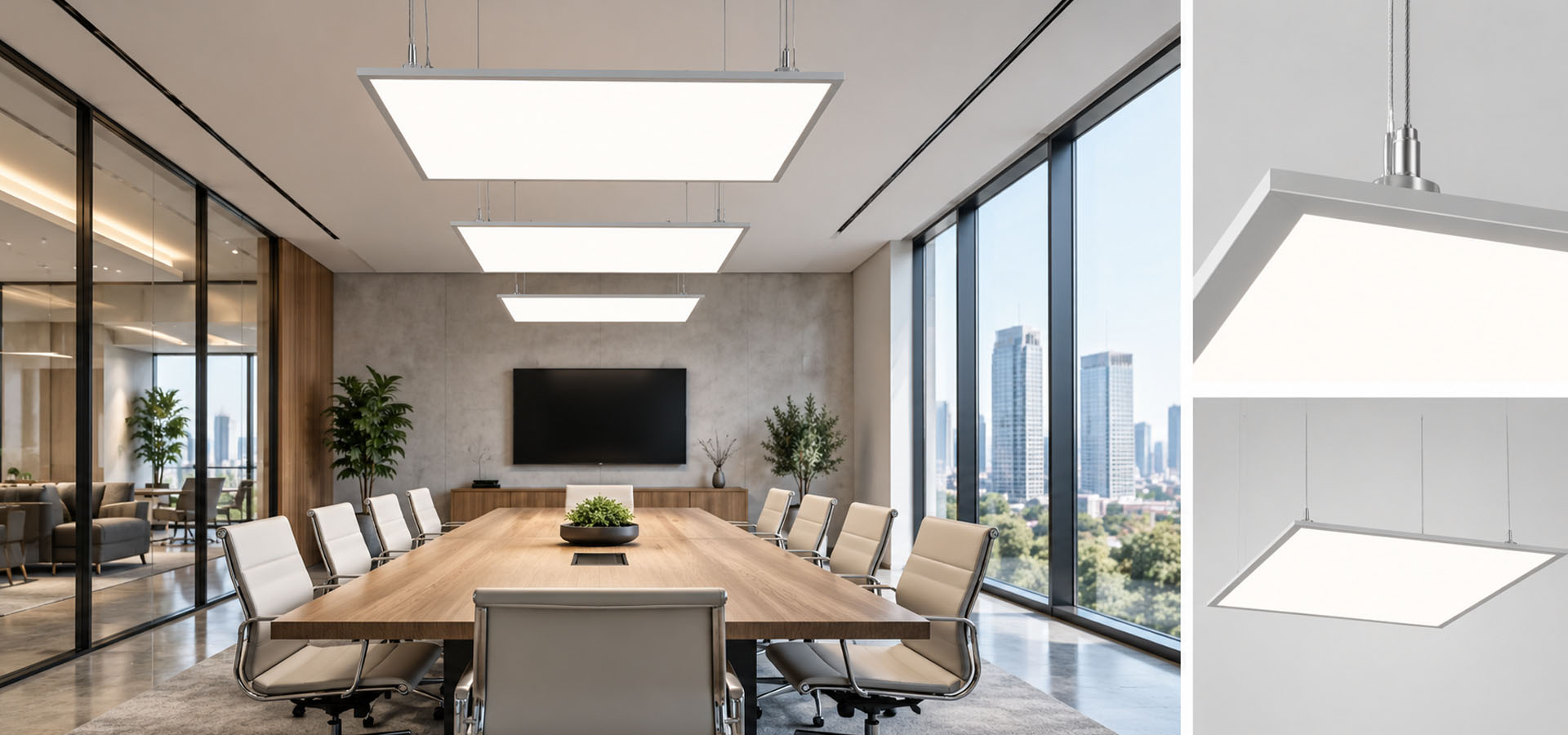
LED panels are flat luminaires that provide broad, uniform light distribution. They are most commonly used in offices, shops, clinics, hospitality venues and other spaces where clean ceiling lighting with a low-profile housing is desirable.
Recessed, surface-mounted and suspended models are available. When selecting a panel, compare actual luminous flux, UGR or glare control where relevant, color temperature, CRI, flicker and driver quality.
When replacing fluorescent ceiling systems, panel layout and quantity must be checked because the optimal number cannot be determined from wattage comparison alone.
POWERFUL DIRECTIONAL LIGHT
LED FLOODLIGHTS
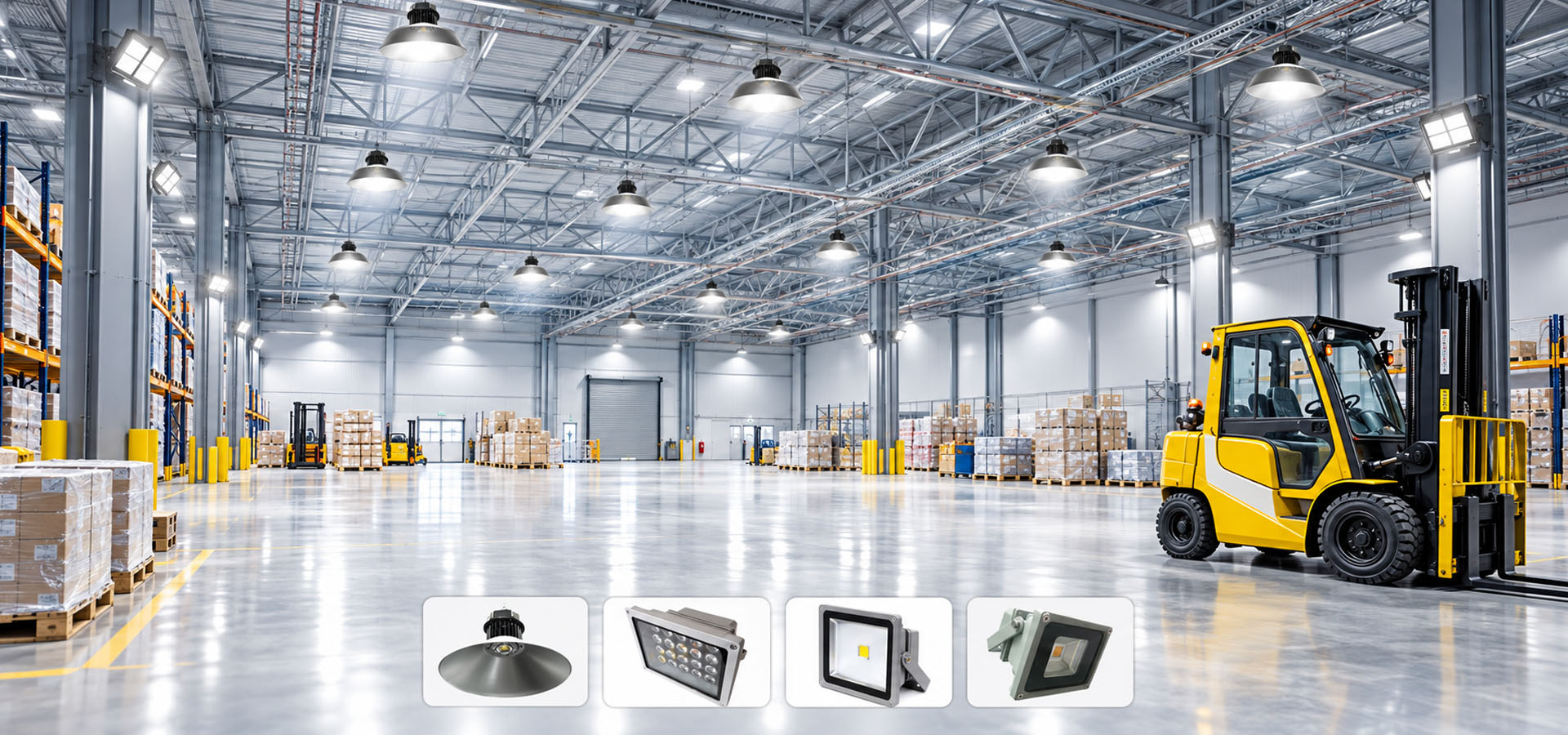
LED floodlights provide a stronger directional or wide-distribution beam and are used on façades, parking areas, sports grounds, warehouses, workshops, production facilities, monuments and other indoor or outdoor areas.
When comparing different light sources, nominal power alone is not sufficient. For a correct replacement, compare luminous flux, efficacy, optics, mounting height, light distribution and the required illuminance on the working or traffic surface.
For professional installations, selection is best based on calculation or measurement of the existing conditions. This allows the appropriate number and power of floodlights to be selected, reduces unnecessary light spill and enables a more accurate estimate of potential energy savings.
Consumption example: if photometric verification for a specific project confirms that 30 existing 300 W floodlights can be replaced with 30 LED floodlights of 50 W, installed power falls from 9.0 kW to 1.5 kW. At 15 operating hours per day, this means about 41,063 kWh less consumption per year. Monetary savings depend on the actual energy price; business users should enter their own effective EUR/kWh in the calculator.
MODULAR LED SYSTEMS
LED DISPLAY / VIDEO WALLS
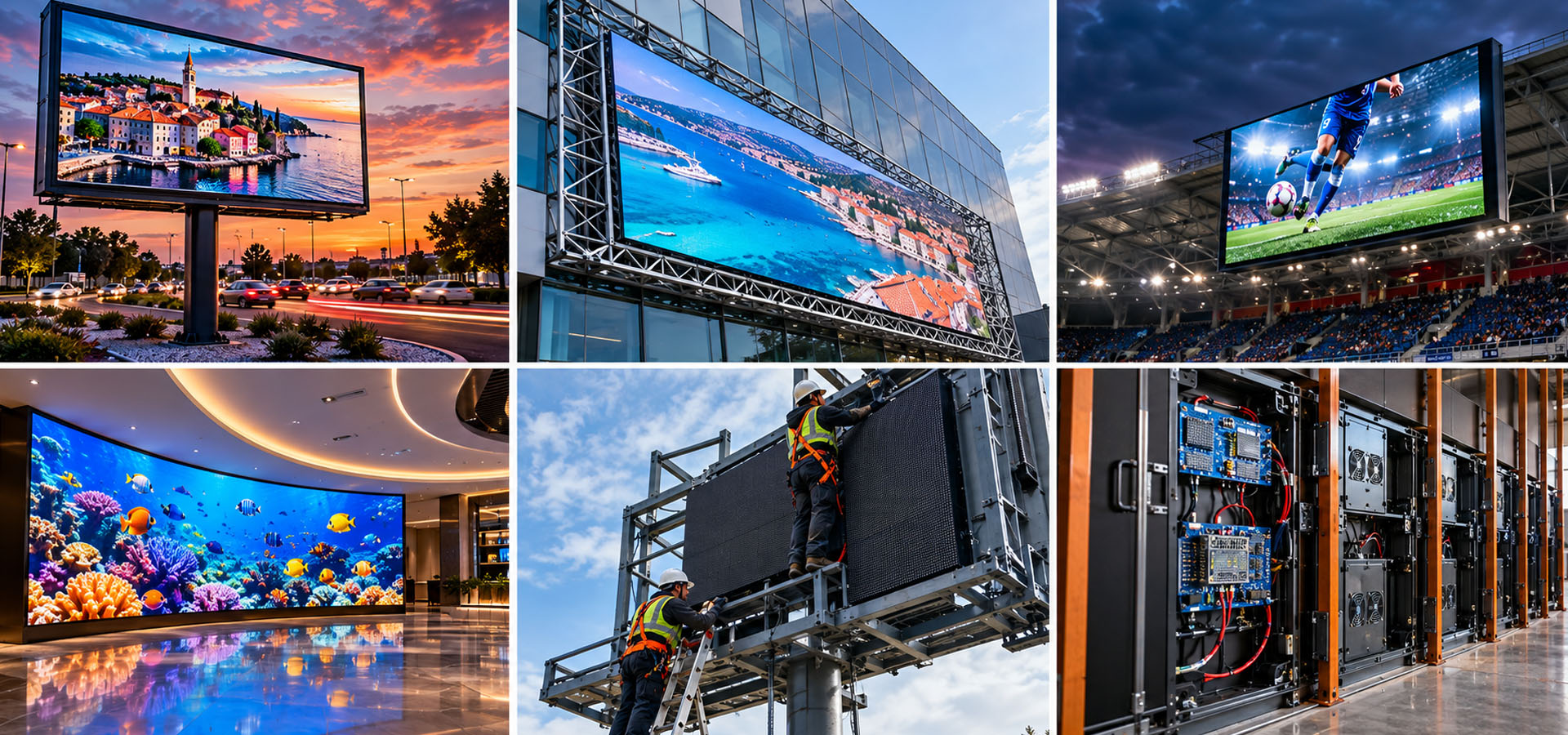
An LED display / video wall consists of modular LED panels combined into a larger surface for displaying text, graphics, photos, animation and video content. Systems can be indoor or outdoor, fixed or mobile, flat, curved or adapted to a custom structure.
When selecting a display, key factors include pixel pitch, viewing distance, brightness, contrast, refresh rate, service-access method and environmental conditions. Outdoor displays require appropriate weather protection and sufficient brightness for daytime visibility.
The project can include fabrication of the supporting structure, electrical supply, installation, commissioning and configuration of the content-management system. Control is coordinated with the selected control system and network infrastructure so that content transfer and scheduling are reliable and easy to use.
ENCLOSURE PROTECTION
IP PROTECTION
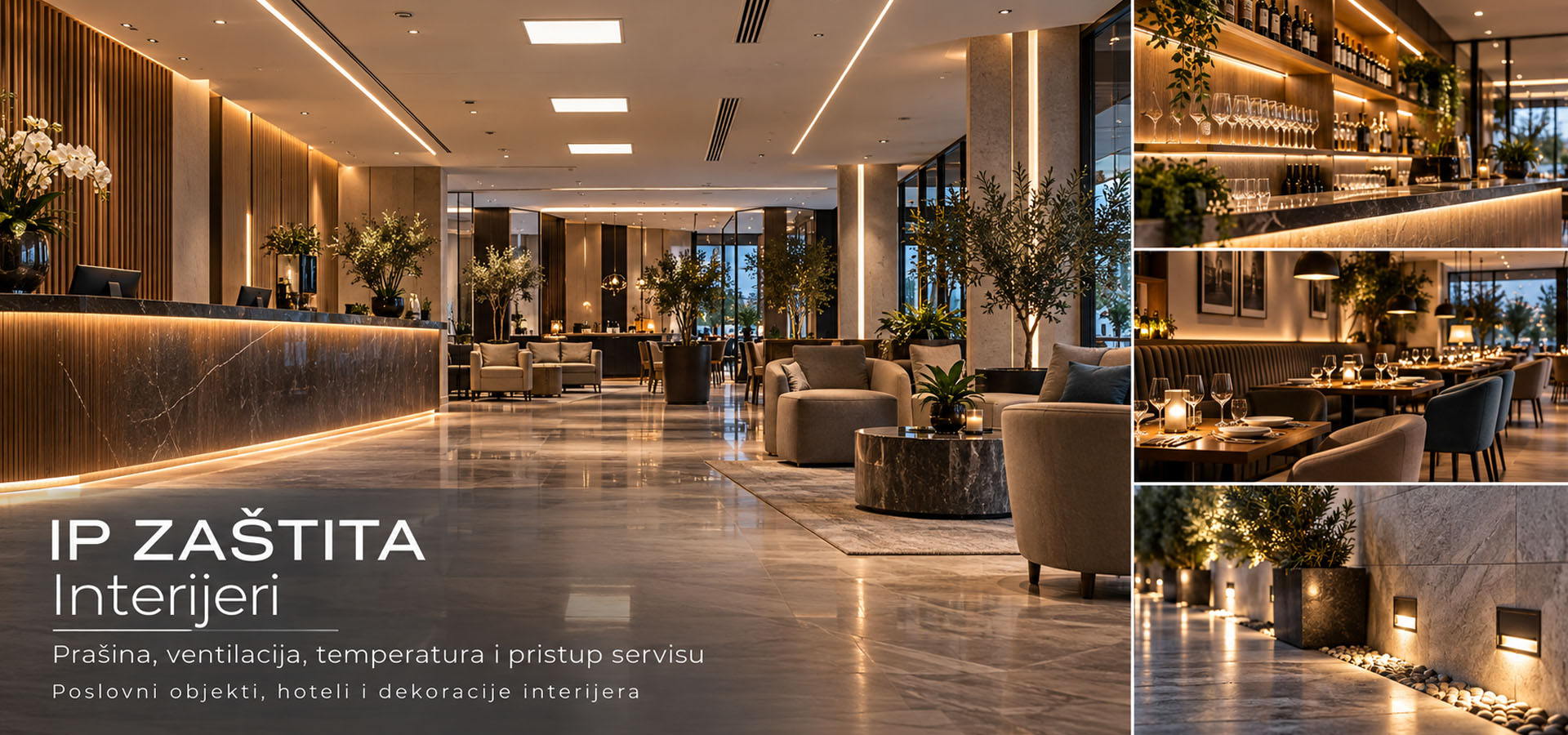
The IP code describes an enclosure’s protection against ingress of solid particles and water. The first digit relates to protection from contact and dust, and the second to water. A higher number does not automatically mean that a product is suitable for every demanding application.
It is especially important to distinguish between protection from splashing, water jets and permanent immersion. For pools, underwater environments and other submerged systems, use products explicitly specified by the manufacturer for the required depth and conditions, together with appropriate cables, connections and power supplies.
Corrosion is an additional issue in marine environments, so enclosure material, the quality of stainless steel or protective coating, and material compatibility must be considered alongside IP protection.
| Application | What to consider | Examples from our range |
|---|
| Interiors | Dust, ventilation, temperature and service access | Commercial buildings, hotels and interior decorations |
| Outdoor areas | Rain, moisture, dust and UV exposure | Façades, streets, gardens and decorative lighting |
| Marine environment | Salt, moisture, corrosion and mechanical load | Marinas, pontoons, decks and vessel contours |
| Underwater application | Permanent water exposure, sealing and power-supply method | Pools, fountains, seabed and submerged parts of vessels |
COLOR & CONTROL
RGB & CONTROL
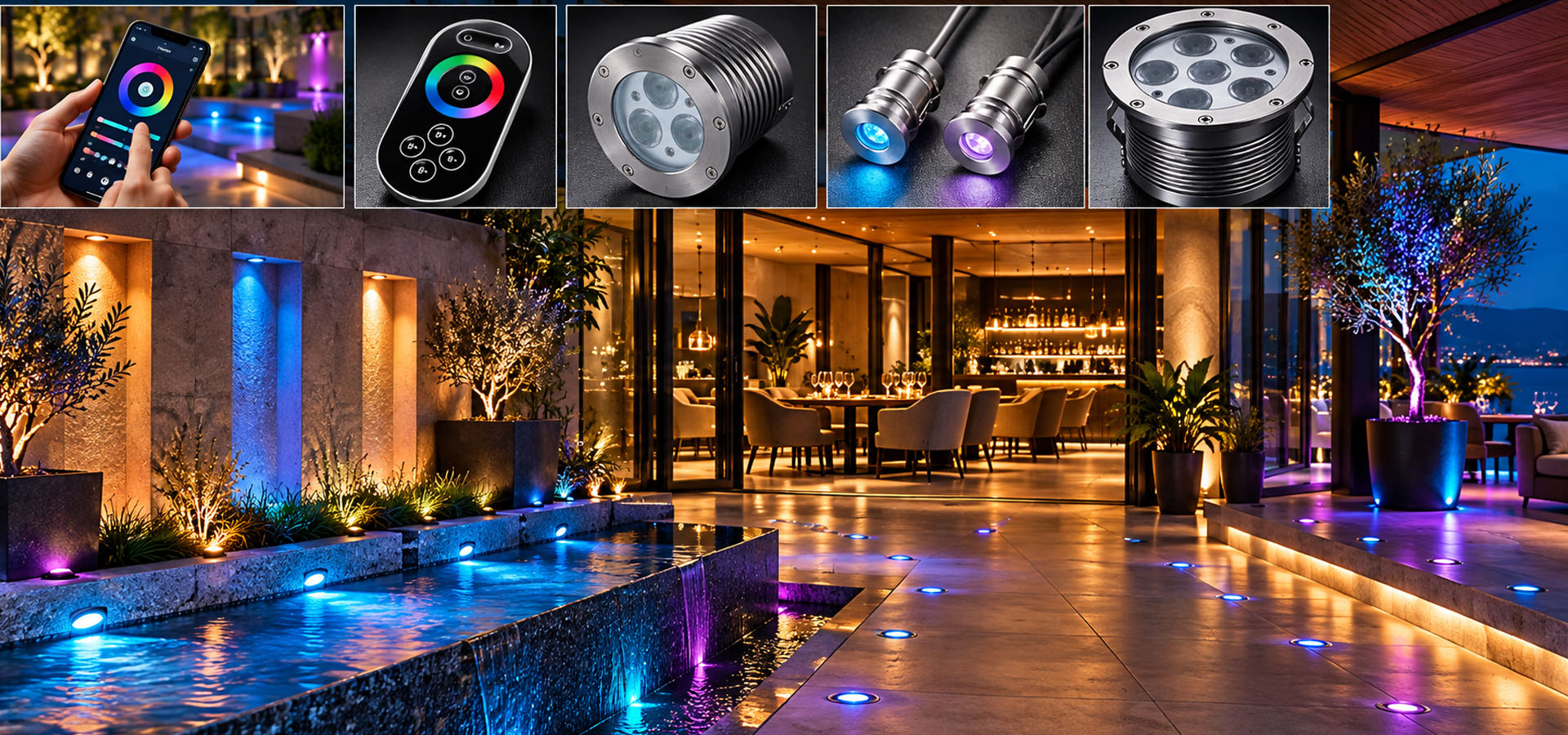
RGB systems use separate red, green and blue channels, while RGBW adds a dedicated white channel. This enables static colors, transitions and programmed scenes, and in professional installations, control can be linked into larger zones and synchronized effects.
Simple controllers are sufficient for smaller systems, while larger projects use addressable or DMX systems. Voltage, maximum current per channel, LED product type, drivers and controller must all be compatible.
Dimming white LED lighting also requires a compatible driver and appropriate control protocol. An incorrect combination can cause flicker, a limited dimming range or unstable operation.
SELECTION & SAFETY
STANDARDS & SAFETY
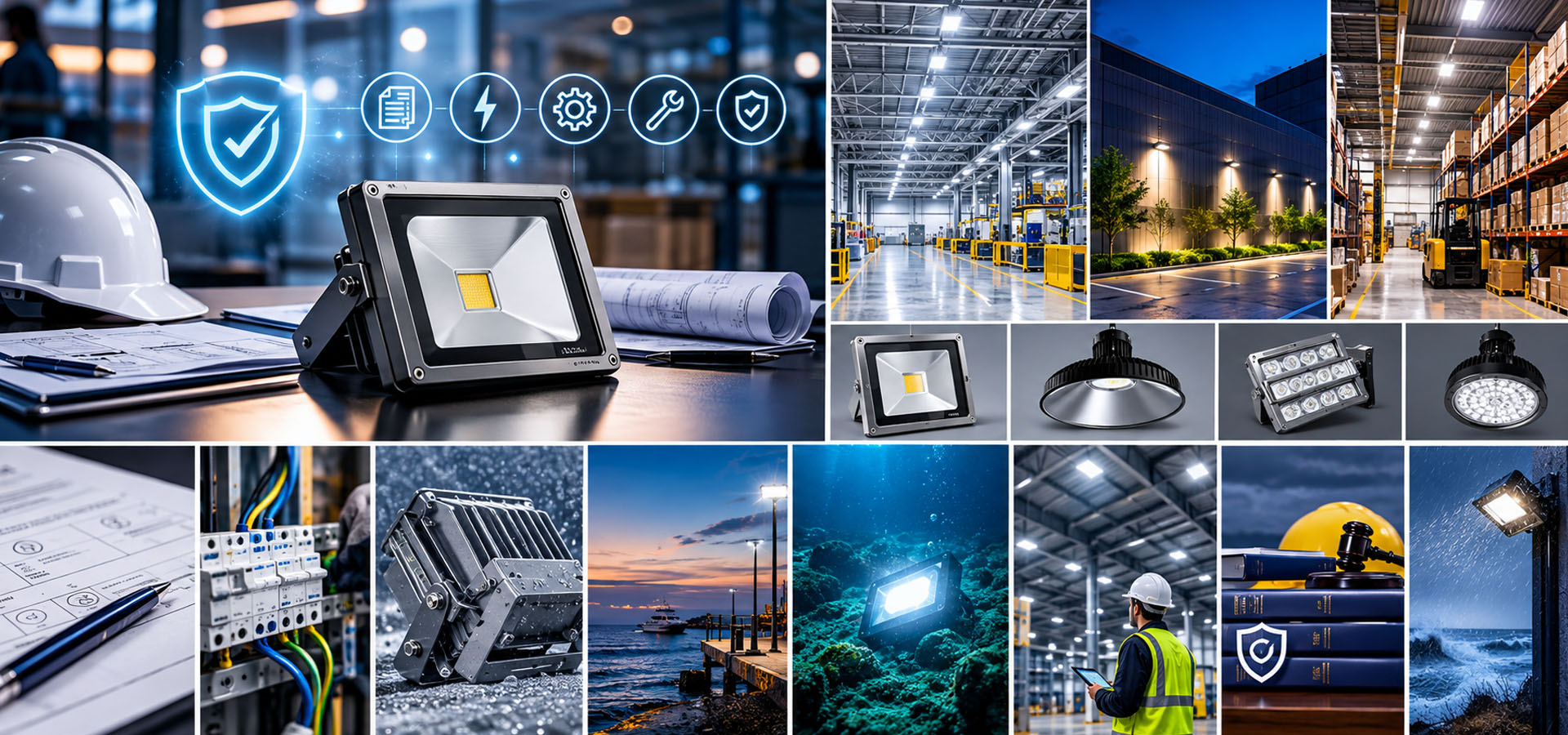
Lighting selection and installation should be based on the technical documentation for the specific product, declared electrical characteristics and the manufacturer’s instructions. The CE mark alone is not a guarantee of light quality or long service life; the relevant product characteristics and conditions of use must be verified.
Outdoor, marine and underwater installations require special attention when selecting power supplies, protective devices, grounding, connections and enclosures. Electrical work should be carried out in accordance with applicable professional rules and regulations for the specific location.
A quality project also requires service planning: power supplies and controllers should remain accessible, and for systems at height, underwater or inside enclosed structures, the access method should be planned in advance.